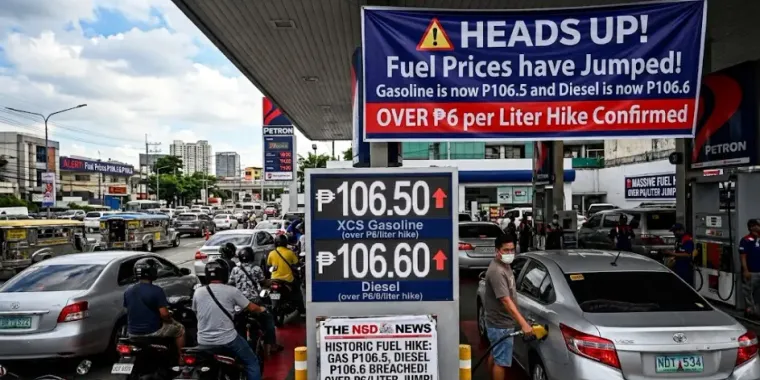
Gasoline, Diesel Prices Set to Jump Over ₱6 per Liter
People who drive take transportation and own businesses in the Philippines are getting ready for a big increase in fuel prices. The companies that sell oil in the Philippines are going to raise the prices of gasoline and diesel a lot. The price of gasoline and diesel is going to go up by more than ₱6.00 per liter this week. This big increase is because of the problems between countries. Because there is not enough oil in the world. This means that people who buy things and the people who drive vehicles for a living are going to have a time paying for fuel. The Philippines is going to feel the effects of this fuel price increase. It will be tough, for motorists, commuters and business owners.
What is Driving the ₱6 per Liter Price Hike?
The anticipated increase comes on the heels of continuous volatility in international crude benchmark prices. According to reporting from BusinessWorld Online, international trading costs over the previous week surged sharply due to supply restrictions and heightened risk premiums across key oil-producing regions.
Global Supply Pressures and Oil Volatility
Several factors have converged in global energy markets to push refined petroleum prices upward:
- OPEC+ Production Restraints: Output quotas enforced by top petroleum-exporting nations have kept global inventories leaner than seasonal averages.
- Shipping and Freight Distortions: Heightened maritime risks in major trade corridors have driven up insurance premiums and rerouted tankers, inflating freight expenses.
- Regional Demand Resilience: Sustained demand for middle distillates, particularly diesel, in major Asian and North American economies has tightened local supplies.
Data monitored by the Department of Energy highlights that domestic pump adjustments closely mirror Mean of Platts Singapore (MOPS) weekly trading averages. When global benchmark prices jump in short succession, local oil companies adjust retail prices accordingly to reflect import replacement costs.
Impact on Public Transport, Logistics, and Daily Goods
A fuel hike exceeding ₱6 per liter does not merely affect vehicle owners—it ripples across the entire national economy. Diesel serves as the primary fuel for public utility vehicles (PUVs), commercial trucks, and agricultural equipment, while gasoline powers millions of private cars, motorcycles, and delivery fleets.
- Public Transportation Costs: Jeepney, bus, and transport network vehicle service (TNVS) drivers will feel an immediate squeeze on daily net earnings, prompting renewed calls for transport fare adjustments or targeted fuel subsidies.
- Supply Chain and Freight Inflation: Freight forwarders and logistics providers may introduce temporary fuel surcharges, increasing the landed cost of food, raw materials, and manufactured goods.
- Consumer Purchasing Power: Higher transportation and logistics costs tend to feed into broader headline inflation, raising food prices and household operational expenses.
How Motorists and Households Can Mitigate Fuel Costs
While global oil prices remain largely beyond individual control, drivers and fleet operators can adopt practical strategies to optimize fuel consumption and minimize expenses.
Smart Driving Habits and Route Planning
- Smooth Acceleration and Braking: Avoid aggressive driving, excessive idling, and sudden speed changes. Maintaining a steady pace can improve fuel economy by up to 15% to 20%.
- Proper Tire Inflation: Driving on under-inflated tires increases rolling resistance, forcing the engine to consume significantly more fuel per kilometer.
- Route Consolidation: Combine multiple errands into a single trip and leverage navigation apps to avoid heavy traffic bottlenecks.
- Leverage Loyalty and Discount Programs: Utilize fuel rewards cards, bank cash-back promos, and mobile payment discounts offered by major retail fuel stations.
According to energy analytics from the U.S. Energy Information Administration, fuel efficiency awareness and proactive fleet management remain among the most effective immediate buffers against short-term petroleum spikes.
Looking Ahead: Market Expectations and Policy Responses
Government agencies and energy officials are closely monitoring market movements to determine whether temporary intervention measures—such as targeted fuel subsidies for public transport operators and agricultural workers—will be triggered. While global crude prices may stabilize if supply disruptions cool, analysts advise consumers to plan for elevated fuel costs in the short term.
Conclusion
The impending fuel price increase of over ₱6 per liter represents a substantial challenge for commuters, drivers, and businesses across the Philippines. By staying informed on price movements and adopting fuel-efficient habits, consumers can better manage their budgets while navigating this sharp spike in energy costs.